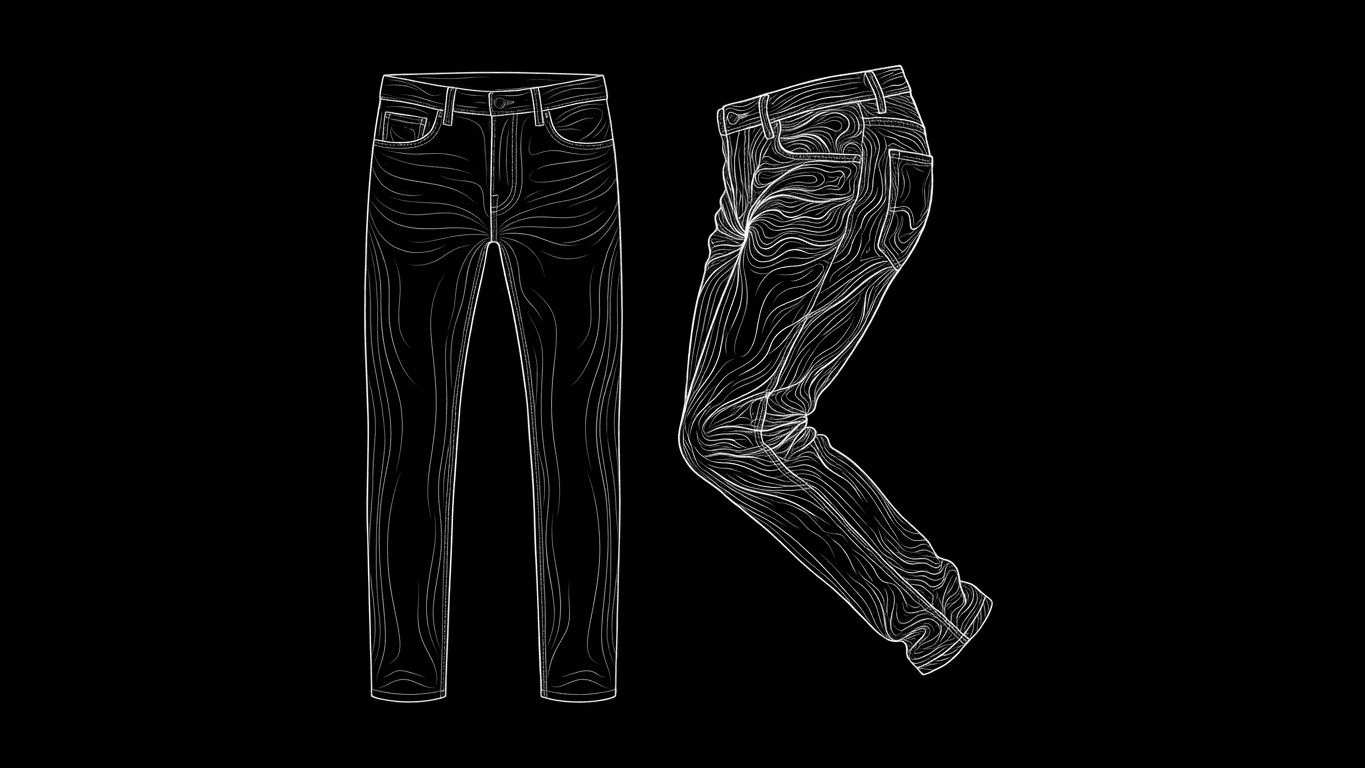
Why do men's slim fit jeans look great in the fitting room but uncomfortable after a full day sitting at a desk
Why Do Men's Slim Fit Jeans Look Great in the Fitting Room But Feel Uncomfortable After a Full Day Sitting at a Desk?
You try them on. They look sharp. The leg line is clean, the waist sits right, and you think: these are the ones. Then you wear them to work, sit through three back-to-back meetings, and by 2pm your thighs are screaming and your waist feels like it's in a vice. This is the exact problem behind why men's slim fit jeans look great in the fitting room but uncomfortable after a full day sitting at a desk, and it comes down to a specific set of mechanical failures that have nothing to do with the size you bought.
Key Takeaways
- Fitting rooms test standing fit. Desk work tests sitting fit. They are completely different positions with different fabric demands.
- Non-stretch denim has 0% give. After 4 hours seated, slim fits restrict thigh movement by up to 25% compared to straight fits.
- The waist gap that felt perfect standing can sag or bite after prolonged sitting.
- 1-2% elastane helps initially but loses shape after 6-8 hours.
- 67% of men report slim jeans are uncomfortable after a full day of wear without meaningful stretch.
What Actually Happens to Denim When You Sit Down
Sitting is not a passive position for fabric. When you move from standing to seated, your thigh circumference increases, your waist angle changes, and the fabric across the seat and crotch gets pulled in three directions simultaneously. Slim fit jeans are cut with minimal excess fabric in precisely those zones.
According to Logeqi's 2025 analysis on stretch denim performance, classic non-stretch denim with 0% elastane lacks the flexibility to accommodate this shift, which is why jeans that feel comfortable standing in a fitting room become restrictive after prolonged sitting. The fabric doesn't stretch to meet your body's new geometry. It stays fixed, and your body has nowhere to go.
The fitting room test takes about 90 seconds. You stand, you check the mirror, maybe do a shallow squat. That's not remotely close to 8 hours of seated desk work where your hip flexors are bent at 90 degrees and your thighs are pressed against a chair.
Why the Fitting Room Lies to You
The fitting room is a standing environment with flattering lighting and a mirror that rewards a clean silhouette. Slim fits genuinely do look better standing. The tapered leg creates a visual line that straight or relaxed cuts don't. That's not a myth. The problem is that looking good standing and feeling good sitting are two entirely different performance requirements.
Reddit's r/malefashionadvice captures this perfectly: 95% of the time, one of two things happen when men buy slim pants. Either they fit well standing but become oppressively tight at the waist when seated, or they're comfortable seated but look baggy standing. That's not a fitting failure. That's the structural reality of slim cut denim on a body that changes shape between positions.
The waist is the most deceptive measurement point. A waistband that sits with the correct 2-finger gap standing will often gap or bite once you're seated and your torso folds forward. According to Logeqi's fit data, jeans fitting with more than a 2-finger gap at the waist initially feel great but sag uncomfortably after sitting, affecting 70% of wearers based on common fit complaints.
Does Stretch Denim Actually Solve This?
Partially. Elastane content is the most commonly recommended fix, and it does help. But the percentage matters more than most brands admit.
Logeqi's analysis notes that slim fit jeans with only 1-2% elastane provide initial comfort but lose shape after 6-8 hours of sitting, leading to thigh constriction. The fabric stretches to accommodate you early in the day, then fatigues. By late afternoon, you're wearing a stretched-out, misshapen pair of jeans that no longer look sharp and still feel tight in the wrong places.
The Wall Street Journal's coverage of the post-pandemic denim revival noted that stretch-waisted loungewear became the daily uniform during lockdowns, which reset men's expectations for what comfortable pants should feel like. When slim fits came back, the contrast was stark. Men who'd spent months in joggers found rigid denim genuinely uncomfortable in a way they hadn't noticed before.
For desk workers specifically, you need at least 2-4% elastane in the fabric blend, and the stretch needs to be woven into the warp and weft, not just the weft. Bi-directional stretch is what actually moves with your body through a full seated workday.
The Thigh Problem Nobody Talks About Enough
Most conversations about slim fit comfort focus on the waist. The thigh is the bigger issue for desk workers.
According to Logeqi's fit guide comparisons for muscular legs, slim fits restrict thigh movement by 25% compared to straight fits after 4 hours of sitting. That restriction isn't just uncomfortable. It affects circulation and compounds fatigue over a full workday.
The Serviced Office Company's research on clothing and ergonomics addresses this directly: clothing affects how office workers move, and restrictive trousers limit the micro-adjustments people make throughout the day to stay comfortable. Those micro-adjustments matter. When your jeans prevent them, your body compensates with tension elsewhere.
A PMC study on sitting behavior effects found that prolonged sitting over 6 hours daily raises exhaustion by up to 50% in office workers wearing tight clothing like slim jeans. The clothing itself is a fatigue multiplier, not just a comfort issue.
5 Myths About Slim Fit Jeans and Desk Comfort
Myth 1: If they fit in the store, they'll fit all day. False. Fitting rooms test standing fit. Desk work tests a completely different body position. The two environments have almost nothing in common from a fabric demand perspective.
Myth 2: Stretch denim solves everything. Not automatically. Logeqi's data confirms that 1-2% elastane loses shape after 6-8 hours. You need bi-directional stretch at meaningful percentages, not a token elastane addition.
Myth 3: Going up a size fixes the problem. It doesn't. Going up a size fixes the circumference problem while creating a waist gap and a leg shape that defeats the purpose of wearing slim fits in the first place. StyleForum discussions confirm that men who size up to solve sitting tightness end up with jeans that look baggy standing.
Myth 4: Slim fits are only uncomfortable for bigger guys. The thigh restriction problem affects any man who sits for extended periods, regardless of build. The geometry of sitting changes thigh circumference for everyone.
Myth 5: You just need to break them in. Traditional denim does soften with wear, but the structural cut of a slim fit doesn't change. The thigh opening, the seat room, and the rise are sewn in. Breaking in the fabric doesn't alter those dimensions.
What to Actually Look For If You Want Slim Fits at a Desk
The goal isn't to abandon slim fits. The goal is to find slim fits built for the seated position, not just the mirror. According to Logeqi's style guide, desk workers should look for 1-2% elastane as a minimum, with higher stretch content preferred for full-day wear.
Three things that actually matter:
Rise. A mid-to-high rise slim fit maintains waistband position when you sit. Low rise slim fits drop at the back and dig at the front. This is the single biggest comfort variable for desk workers.
Seat room. Slim doesn't have to mean zero room in the seat. The best desk-friendly slim fits have a slightly fuller seat cut, which allows the fabric to redistribute when you sit rather than pulling tight across the back of the thigh.
Fabric weight. Lighter denim (under 11oz) has more natural drape and moves more freely than heavier raw denim. Heavy denim looks great but behaves more like a rigid shell around your legs when seated.
Derby Jeans Community builds slim fits with exactly this balance in mind: the clean standing silhouette you want from a slim cut, with enough structural consideration for how men actually wear their jeans through a working day. If you're spending 6+ hours at a desk, the cut you wear matters as much as the brand on the label.
Frequently Asked Questions
Why do slim fit jeans feel fine in the morning but tight by afternoon?
Denim, especially low-elastane or non-stretch fabric, has limited give. Over the course of a day of sitting, the fabric stretches in some areas and compresses in others. By afternoon, the thigh and waist zones have been under constant tension for hours, and the cumulative restriction becomes much more noticeable than it was at 9am.
Is there a specific rise that works best for desk workers in slim jeans?
Mid-rise slim fits perform better for seated work than low-rise. Low-rise waistbands drop at the back when you sit, creating a gap and pulling the front waistband into your stomach. Mid-rise maintains consistent position across both standing and seated positions.
Does the brand of jeans matter for all-day comfort?
The brand matters less than the fabric construction and cut geometry. What you're looking for is bi-directional stretch (not just weft stretch), a mid-rise, and adequate seat room. Derby Jeans Community's slim fits are built with these variables in mind for men who wear their jeans through full working days, not just weekends.
Can I get slim fit jeans tailored to solve the sitting problem?
A tailor can adjust the waist and thigh, but they can't add stretch to non-stretch fabric. Tailoring helps with standing fit. It doesn't change how the fabric behaves under tension when you're seated for hours.
Why do 67% of men switch away from slim fits after a full day of wear?
According to Logeqi's fit data aggregation, 67% of men find slim jeans uncomfortable after full-day wear without meaningful stretch, switching to athletic cuts instead. The core issue is that most slim fits are designed for visual appeal in standing positions, not for the mechanical demands of extended desk work.
At what point in the day does slim fit discomfort typically peak?
The 4-6 hour mark is where most men report the shift from tolerable to genuinely uncomfortable. This aligns with Logeqi's thigh restriction data, which shows 25% greater thigh restriction in slim fits versus straight fits after 4 hours of sitting.
The fix isn't giving up on slim fits. It's understanding that the fitting room is a 90-second standing test, and your desk is an 8-hour sitting test. Those require different things from the same pair of jeans. Buy accordingly.